
.svg)
.svg)
.svg)


.svg)

Introduction
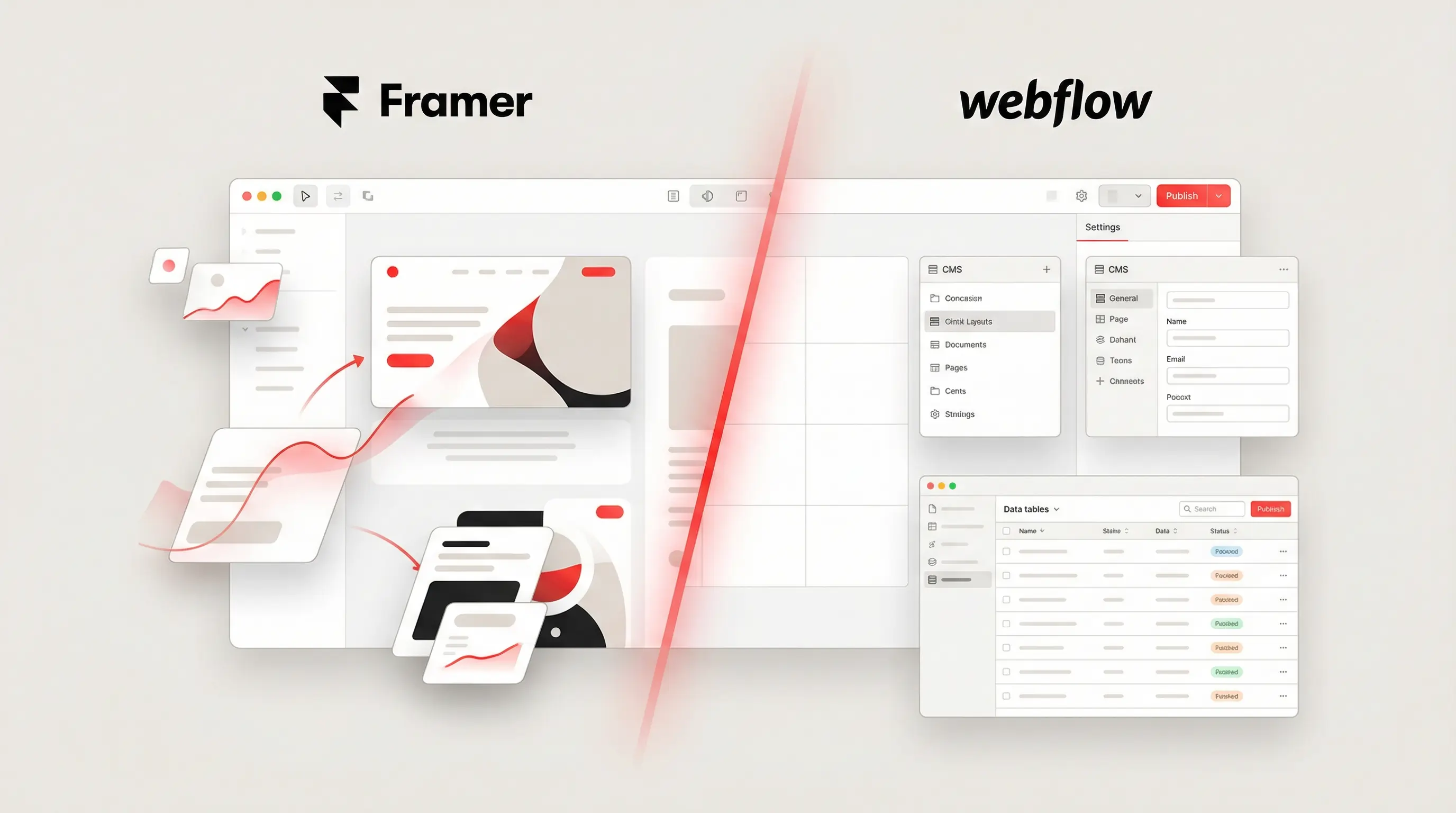
Choosing between Framer and Webflow is one of the most common questions modern product teams and founders face today. Both platforms are powerful, visual, and designed for speed—but they serve very different purposes.
The mistake many teams make is treating Framer and Webflow as competitors rather than tools built for different stages of a website’s lifecycle. Picking the wrong platform often leads to unnecessary rebuilds, scalability issues, or design limitations down the line.
This guide breaks down when Framer is the right choice, when Webflow makes more sense, and how to decide based on your goals—not trends.
What Framer Is Really Built For
Framer shines in environments where speed, design iteration, and visual storytelling matter most. It is especially effective for landing pages, early-stage products, marketing experiments, and design-led websites that prioritize aesthetics and rapid updates.
Framer’s real strength lies in how quickly teams can move. Designers can publish directly without relying on developers, making it ideal for startups validating ideas or teams running frequent campaign experiments. Animations, transitions, and interactions are easy to implement and feel natural within the platform.
For short-lived pages, MVPs, and visually expressive marketing sites, Framer removes friction and accelerates time-to-launch.
Where Framer Starts to Show Limitations
While Framer is excellent for speed and design, it is not built for complex content systems or long-term scalability. As websites grow, managing structured content, large CMS collections, and advanced integrations becomes challenging.
Framer also offers limited flexibility when it comes to custom workflows, dynamic data relationships, and enterprise-level SEO control. Teams that rely heavily on content operations or multi-page scalability often outgrow Framer faster than expected.
Framer works best when simplicity is an advantage—not when complexity becomes unavoidable.
What Webflow Is Designed to Handle
Webflow is built for scale. It excels when websites need structured content, robust CMS capabilities, advanced SEO control, and long-term maintainability.
Marketing teams benefit from Webflow’s editor, which allows content updates without breaking layouts. Developers appreciate the clean code output and ability to integrate custom logic where needed. As businesses grow, Webflow adapts without forcing a platform change.
Webflow is particularly strong for SaaS websites, enterprise marketing platforms, content-heavy sites, and brands that treat their website as a core business asset.
Why Webflow Is Better for Long-Term Growth
As teams expand, websites become more than just visual touchpoints. They integrate with CRMs, analytics tools, marketing automation platforms, and internal workflows. Webflow supports this evolution with flexible CMS structures, custom integrations, and scalable architecture.
Unlike tools designed for quick launches, Webflow reduces technical debt over time. Changes are predictable, performance remains stable, and SEO foundations stay intact as the site grows.
For businesses thinking beyond launch day, Webflow provides confidence and longevity.
How Teams Successfully Use Both Framer and Webflow
The smartest teams don’t choose one platform forever—they use both strategically.
Framer is often used for:
- Early-stage landing pages
- Product launches
- Campaign-specific pages
- Design validation
Webflow is used for:
- Main marketing websites
- Content hubs and blogs
- SEO-driven growth
- Scalable product sites
This hybrid approach allows teams to move fast without compromising long-term stability.
Making the Right Decision for Your Website
Choosing between Framer and Webflow depends on what you need right now and where your business is heading. If speed, experimentation, and design expression are your top priorities, Framer is a strong choice. If scalability, structure, and growth matter more, Webflow is the safer long-term investment.
The key is aligning the platform with business goals—not aesthetics alone.
Final Thoughts
Framer and Webflow are not rivals. They are tools built for different problems.
Understanding their strengths helps teams avoid costly rebuilds, technical frustration, and growth bottlenecks. When used correctly, each platform plays a valuable role in a modern web strategy.
Need Help Choosing the Right Platform?
If you’re unsure whether Framer or Webflow fits your next project, Tupple helps teams choose, build, and scale websites using the right tools at the right time.
👉 Book a free consultation

.svg)
.svg)
.svg)


.svg)